Dining style is the set of decisions you make before the food reaches the table: how the meal is served, how many courses, how the table is set, what the room is doing, and how long everyone sits. Get those choices right and ordinary cooking reads as generous and deliberate. Get them wrong and the same food reads as a plate of ingredients. The single most consequential choice is service style — plated, family-style, or buffet — because it determines your oven timing, your dish count, your seating, and how much of the meal you spend standing up.
Choose the service style first, because everything else hangs off it
Plated service means the kitchen portions every dish and the host does not sit down until the last plate lands. Family-style means food goes to the middle of the table in serving vessels and guests pass it. Buffet means the food sits out on a sideboard and guests serve themselves. Each one sets a different constraint on the cook, and picking the wrong one for your menu is the most common reason a dinner party feels frantic.
Plated suits a menu with a sauce that needs to look a certain way, a piece of fish that goes dry in five minutes, or a table too small for serving dishes. The cost is that you are in the kitchen while everyone else is at the table, and you need a way to hold finished plates hot — a warm oven, a heat lamp, or a stack of heated plates — because food cannot wait indefinitely. It also demands that you can portion and plate several plates at once, which is a physical skill, not a menu one. If you have never plated six identical dishes in ninety seconds, the first time you try it will be the first time you understand why restaurant kitchens have a pass.
Family-style is the most forgiving for a home cook and the most social at the table. Serving vessels go down, people reach, conversation happens. The trade-off is space: every dish needs a vessel, every vessel needs a spot on the table, and the table needs room left for plates and glasses. It also means the food sits at ambient temperature while people eat, so the food safety clock matters — perishable food should not sit in the range between 40°F and 140°F for more than 2 hours before it must be discarded. On a long dinner that is a real limit, not a formality. If your table is small or your guest list is large, family-style stops working before the food does.
Buffet is the right call for a crowd, a mixed menu, or a party where people arrive at different times. It is also the style with the most failure modes: a line that moves slowly, a dish that runs out before the last guest, and hot food that cools below the temperature it needs to be held at. Hot holding means keeping cooked food at 140°F or above for serving, and it only applies after the food has first been reheated to at least 165°F. A chafing dish with a properly lit fuel source will hold that; a plain ceramic dish on a sideboard will not. If you are not prepared to hold hot food hot, buffet is the wrong choice for anything containing meat, dairy, or eggs.
Build the menu around your equipment and your oven, not your ambition
The number of dishes a menu can carry is set by how many things need the oven at the same temperature at the same time, not by how many recipes you want to cook. A menu of a roast, a gratin, and a warm bread all want the oven, and they want it at different temperatures and for different lengths of time. That is a menu that will run late. A menu of one oven dish, one stovetop dish, one cold dish, and one make-ahead dessert is a menu that can land on time even if you are cooking alone.
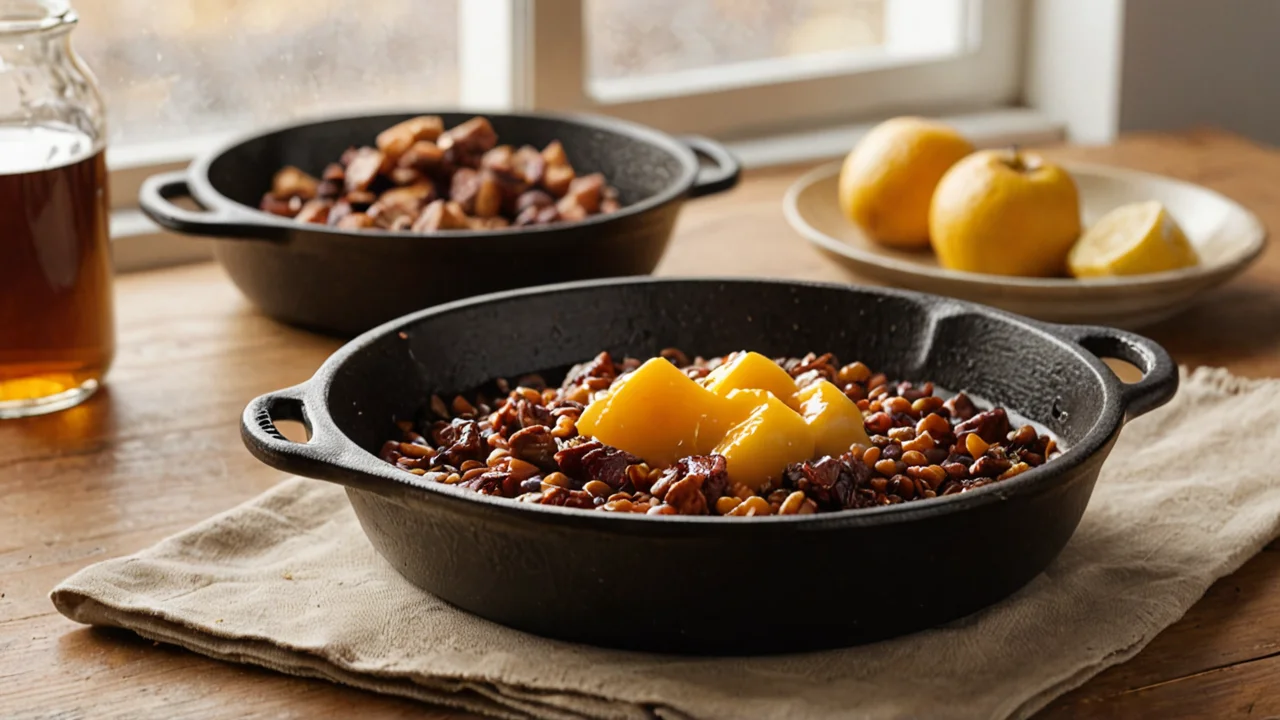
Look at your appliances honestly before you write the menu. A slow cooker is a countertop electric appliance that cooks at relatively low, steady temperatures, generally between 170°F and 280°F, which makes it good for tough cuts and mixed dishes that need to become tender without your attention. It is not a substitute for an oven roast, and it is not a place to finish a dish that needs browning. If you plan to use one for hot holding, the rules are specific: reheat the food to 165°F first, then hold it at 140°F or above. A slow cooker set to its lowest setting is not automatically a safe holding temperature, so check it rather than assume.
Temperature is the one part of menu planning where guessing is not acceptable. All poultry, including chicken breast, needs a safe minimum internal temperature of 165°F (74°C) whether it is cooked in an oven, grill, air fryer, or slow cooker, measured with a food thermometer in the thickest part of the meat and away from bone. Egg dishes, including casseroles and slow cooker recipes containing eggs, need 160°F (71°C). Those two numbers cover most of what goes wrong at a dinner party, and they are the reason a thermometer belongs in the kitchen drawer you actually open, not the one at the back.
The cost of building the menu around equipment is that you will sometimes cook a dish you are less excited about because it fits the oven schedule. That is the trade. A menu of dishes that all want the same oven at the same time is a menu that will be eaten cold or eaten late, and no amount of plating will fix it.
Set the table to match the food, not the photograph
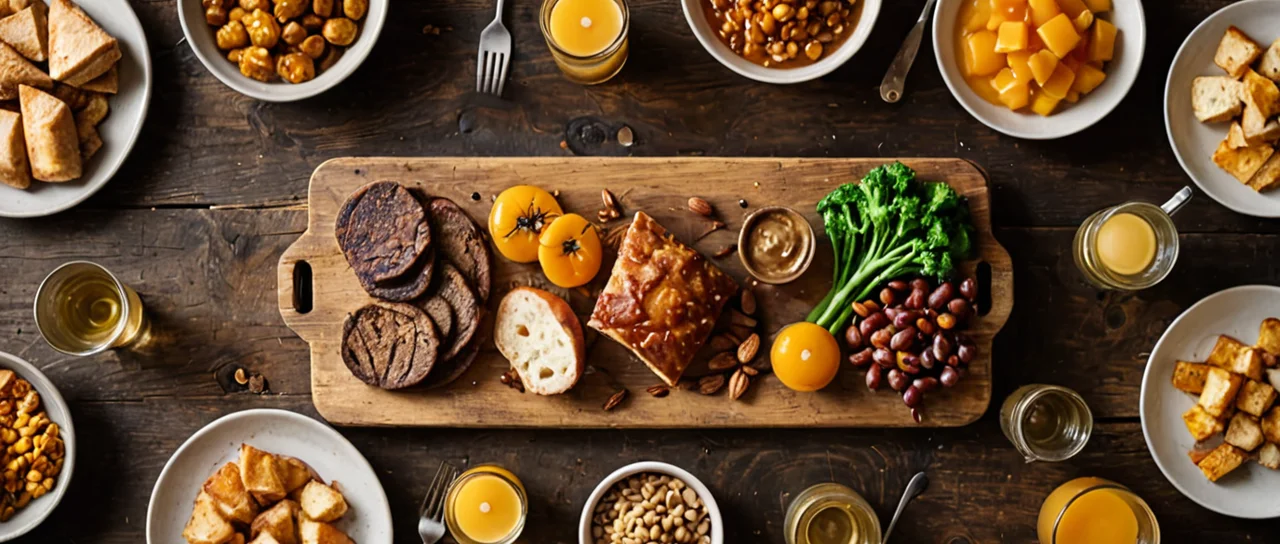
A table set for family-style needs different things than a table set for plated service. Family-style wants a center that can hold serving vessels — a runner rather than a centerpiece, low enough that people can see across it. Plated service wants a clear center, because the plates come from the kitchen and the middle of the table is where the wine and the water go. A tall centerpiece in the middle of a family-style table is a wall, and guests will move it before the second course.
Glassware is where most tables overreach. Two glasses per setting — one for water, one for wine — is enough for almost any home dinner, and it leaves room for the serving vessels that family-style demands. A full formal setting with multiple forks and a charger plate looks impressive and then makes people nervous about which one to use. The food gets colder while they decide. If the meal is casual, set it casually; the mismatch between a very formal table and a pot of stew in the middle is more awkward than a plain table with good food.
Lighting is the setting most people ignore and the one that changes the meal most. Overhead light directly above the table flattens faces and puts a glare on every plate. A lamp on a side table, a candle, or a dimmer on the overhead does more for how the food reads than a new set of dishes. The trade-off is practical: dim light makes it harder to see whether the chicken is cooked through, so check doneness in the kitchen under proper light before the plates go out.
Sequence the courses so the kitchen can keep up
The number of courses a home dinner can carry is smaller than most hosts think. Three is generous: something to start, a main, something sweet. Four is possible if the first course is cold and made ahead and the dessert is made ahead too. Beyond that, the host is cooking through the whole meal and the guests are eating through the whole meal, and the two stop overlapping. The most common sequencing error is a hot first course that needs last-minute work, which puts the main course behind before it has started.
A cold or room-temperature first course — a plate of something cured, a salad, a dish of olives and bread — buys you the time to finish the main. It also means the first course can be plated and waiting before guests arrive, which is the difference between a calm start and a frantic one. A hot first course is a choice you make when the main is a make-ahead braise that only needs reheating, and even then it should be something that cooks in minutes.
Timing the main is about resting, not cooking. A roast needs to come out before it is carved, and the gap between the oven and the table is where the plating happens. If the main is a slow cooker dish, the appliance is holding it at temperature while you finish everything else, which is the whole reason to use one for a dinner party. If the main is a roast, the resting time is your window to get the sides out, and a menu without a make-ahead side will not fit in that window.
Dessert is the course to make ahead or buy. A dessert that needs last-minute assembly is a dessert that keeps the host in the kitchen after everyone else has moved to the sofa, and it is the course most easily replaced by something that was done that morning. The trade-off is that a made-ahead dessert is often a colder, richer thing — a custard, a tart, a cake — rather than the warm, theatrical finish. That is a fair trade for a host who wants to sit down.
Match the room and the pace to the meal you are actually serving
A long, slow dinner and a quick weeknight meal want different rooms. A long dinner wants comfortable chairs, a table people can sit at for a couple of hours, and light that does not fatigue the eyes. A quick meal wants a table people can clear fast and a setup that does not need to be reset. The mistake is treating every meal as the long dinner: the table gets set formally, the courses get sequenced, and a Tuesday night becomes an event that nobody has the energy for.
Pace is set by the host, not the guests. If you clear the first course quickly and put the main down, the meal moves. If you leave the first-course plates on the table while you finish the main, the meal stalls and the table fills with clutter. The practical rule is to clear a course before the next one comes out, and to have somewhere for the dirty plates to go that is not the table. A tray on a sideboard, a stack by the sink, a clear counter — any of these works. What does not work is stacking plates at the table while people are still eating.
Music, if it is on, should be quiet enough that people do not have to raise their voices. A dinner where the music is loud enough to fill a silence is a dinner where the conversation is work. The trade-off is that a silent room with a quiet meal can feel stiff, so the music is doing real work — it just needs to be background, not a performance.
Room temperature matters more than most hosts admit. A room that is too warm makes a hot meal unpleasant and a cold dish welcome; a room that is too cold makes the food cold before it is eaten. If the oven has been on for hours, the kitchen will be the warmest room in the house, and the dining room will feel cold by comparison. Opening a window before guests arrive, or moving the meal to a cooler room, is a small adjustment with a large effect on how the food reads.
Know when each dining style is the wrong choice
Plated service is the wrong choice when you are cooking alone for more than a handful of people, when the menu has more than one dish that needs last-minute work, or when you do not have a way to hold plates hot. It is also wrong when the point of the meal is conversation, because the host is absent for the part of the meal that matters most.
Family-style is the wrong choice when the table is small, the guest list is large, or the menu includes dishes that need to be served at a precise temperature. A dish that is good at 165°F and unpleasant at 120°F does not belong in the middle of a table where it will sit. It is also wrong when the food is messy — a dish with a lot of sauce in a passing bowl is a dish that ends up on the tablecloth.
Buffet is the wrong choice when you cannot hold hot food at 140°F or above, when the guest list is small enough that a line feels absurd, or when the menu includes anything that deteriorates as it sits. It is also wrong when the room has no clear path to the food, because a buffet in a tight room becomes a traffic problem before it becomes a meal.
And any style is the wrong choice when the menu has not been built around it. The service style, the menu, the table, and the room are one decision made in four parts. The hosts who make it look easy have usually made the decision early — before the shopping list, before the table is set — and then let the rest of the meal follow from it. The ones who look frazzled have usually chosen the food first and tried to make the style fit afterward.
| Service style | Best for | Main constraint | When it fails |
|---|---|---|---|
| Plated | Precise dishes, small guest lists, sauces that need to look right | Host is in the kitchen; plates must be held hot | Cooking alone for a crowd, or no way to hold plates |
| Family-style | Social meals, forgiving menus, tables with room in the middle | Table space and vessel count; food cools as it sits | Small table, large group, dishes that need a precise temperature |
| Buffet | Big groups, mixed menus, staggered arrivals | Hot holding at 140°F or above after reheating to 165°F | No holding equipment, tight room, dishes that deteriorate as they sit |
The thread running through all of it is that dining style is a set of trade-offs, not a set of rules. Plated service buys precision at the cost of the host's presence. Family-style buys conviviality at the cost of temperature and space. Buffet buys capacity at the cost of control. The right choice is the one whose cost you are willing to pay for that particular meal, and the wrong choice is the one whose cost you discover halfway through.