Cooking technique is mostly a set of decisions about heat: how fast you push it into the food, how evenly, and how wet the environment is while it happens. Almost every method you have heard of — searing, braising, steaming, roasting, frying, slow cooking — is a position on those three axes, and once you can name which one a recipe is really asking you to change, you can substitute equipment, swap cuts, and fix a dish that is going wrong instead of starting over. The second half of the job is knowing where the heat stops being a matter of taste and becomes a matter of safety, because that line is fixed and does not care how good your instincts are.
Dry heat versus wet heat, and why the distinction decides your cut
Dry heat — roasting, grilling, broiling, pan-searing, air frying — coagulates surface proteins fast, drives off moisture, and builds browning through the Maillard reaction and, at higher temperatures, caramelization of sugars. It rewards tender cuts and anything you want a crust on. Wet heat — braising, stewing, steaming, poaching, slow cooking — caps the temperature at the boiling point of water and keeps the environment humid, so collagen in tough cuts has time to dissolve into gelatin without the exterior turning to leather first.
Pick the wrong side and the failure is unmistakable. A chuck roast in a hot oven dries out and tightens before the connective tissue breaks down; you notice because the meat shreds into dry fibers rather than falling apart. A pork tenderloin in a slow cooker collapses into something wet and uniform; you notice because there is no crust, no contrast, and the texture is the same from edge to center. The cut tells you which side you are on. Shoulder, shank, brisket, short rib, oxtail: wet heat. Loin, ribeye, breast, fish fillet, most vegetables: dry heat, or a wet method treated gently and briefly.
The trade-off is time against control. Wet heat is forgiving — a braise that goes twenty minutes long is still a braise — but it costs you the crust, which is why so many braises finish under a broiler or in a hot pan. Dry heat gives you browning and texture but punishes inattention: a grill or a hot skillet can take a piece of fish from translucent to chalky in under a minute. If you are cooking to impress on a schedule, dry heat is the higher-variance choice.
One practical exception worth knowing: searing does not "seal in" juices. That is a myth. Searing builds flavor and texture through browning, and a seared piece of meat loses moisture at essentially the same rate as an unseared one. Sear for flavor, then choose your cooking method on the merits of the cut.
Temperature is the technique; time is just the delivery mechanism
Every technique on this page is really a way of moving food to a target internal temperature and holding it there long enough to do what you want. A food thermometer in the thickest part of the meat, away from bone, is the only reliable way to know where you are. Time-and-weight charts are guesses that assume a starting temperature, a pan, an oven that is actually calibrated, and a piece of meat of a specific shape. None of those are guaranteed.
The poultry number is not negotiable: 165°F (74°C) throughout, whether you are roasting, grilling, air frying, or using a slow cooker. That is the point at which Salmonella and Campylobacter are reduced to safe levels. Note what this does not say — it does not say chicken is unsafe below that temperature, because pasteurization is a function of temperature and time, and a breast held at a lower temperature for longer is microbiologically equivalent. But the single-number rule is the one you can apply without a table and a stopwatch, and it is the one that keeps you out of trouble. Cook chicken to 165°F and stop arguing with it.
Egg dishes — casseroles, slow cooker recipes with egg in them, custards — need 160°F (71°C). This catches people out in slow cookers especially, because the appliance runs low and a custard or egg-thickened dish can sit below the target for a long stretch while the rest of the pot looks done.
The cost of thermometers is small and the cost of skipping them is a dry bird or a foodborne illness. An instant-read probe is the single highest-return purchase in a kitchen after a decent knife. The limit: a thermometer tells you the temperature at one point in space. In a roast, the center can be at target while the area near the bone is not, which is exactly why the instruction says thickest part, away from bone.
Low and slow: what a slow cooker actually does, and what it cannot do
A slow cooker is a countertop electric appliance that cooks at relatively low, steady temperatures, generally between 170°F and 280°F during normal cooking. That range is the whole story. It is above the food safety danger zone at the top end and close to it at the bottom, which is why slow cooker recipes are built around liquid, a tight lid, and a long hold rather than around browning.
What it does well: tough cuts with a lot of collagen, dried beans (after a hard boil — do not skip that step for kidney beans), stews, chilis, pulled pork, stock. The steady humid heat converts collagen to gelatin over hours, and because the appliance is sealed, there is no evaporation to concentrate and dry the food. What it does badly: anything you want browned, anything you want rare, anything delicate, and anything where texture contrast matters. You cannot get a crust in a slow cooker, full stop. If a recipe promises one, it is having you sear first in a separate pan or finish under a broiler, and you should believe the second half of that instruction.
The safety mechanics are specific and worth memorizing because they are where slow cookers go wrong. Perishable food should not sit in the danger zone — between 40°F and 140°F — for more than 2 hours before it must be discarded. A slow cooker on low, filled with cold ingredients straight from the fridge, can take a long time to climb out of that range. The fix is to start with ingredients that are not refrigerator-cold where the recipe allows, to use the high setting for the first stretch, and never to cook a large roast from frozen in one. If you are reheating cooked food to put in a slow cooker for hot holding, it must be reheated to 165°F first and then held at 140°F or above for serving. A slow cooker is not a reheat-and-hold device for a cold casserole; it will spend too long in the danger zone getting there.
The honest trade-off: a slow cooker buys you unattended time and tenderness at the cost of browning, precision, and any kind of doneness control. It is the wrong tool for a steak, a fish fillet, a custard without a thermometer, and anything you want to serve medium-rare.
Searing, roasting, and the oven's real problem: uneven heat
Oven roasting is dry heat delivered by air, and air is a poor conductor compared to a hot pan or a vat of oil. That is why a roast browns slowly in an oven and quickly in a skillet, and why the single most useful thing you can do for oven cooking is to preheat thoroughly and give the food space. Crowding a sheet pan steams the food in its own moisture; you notice because the vegetables come out pale and limp instead of browned at the edges.
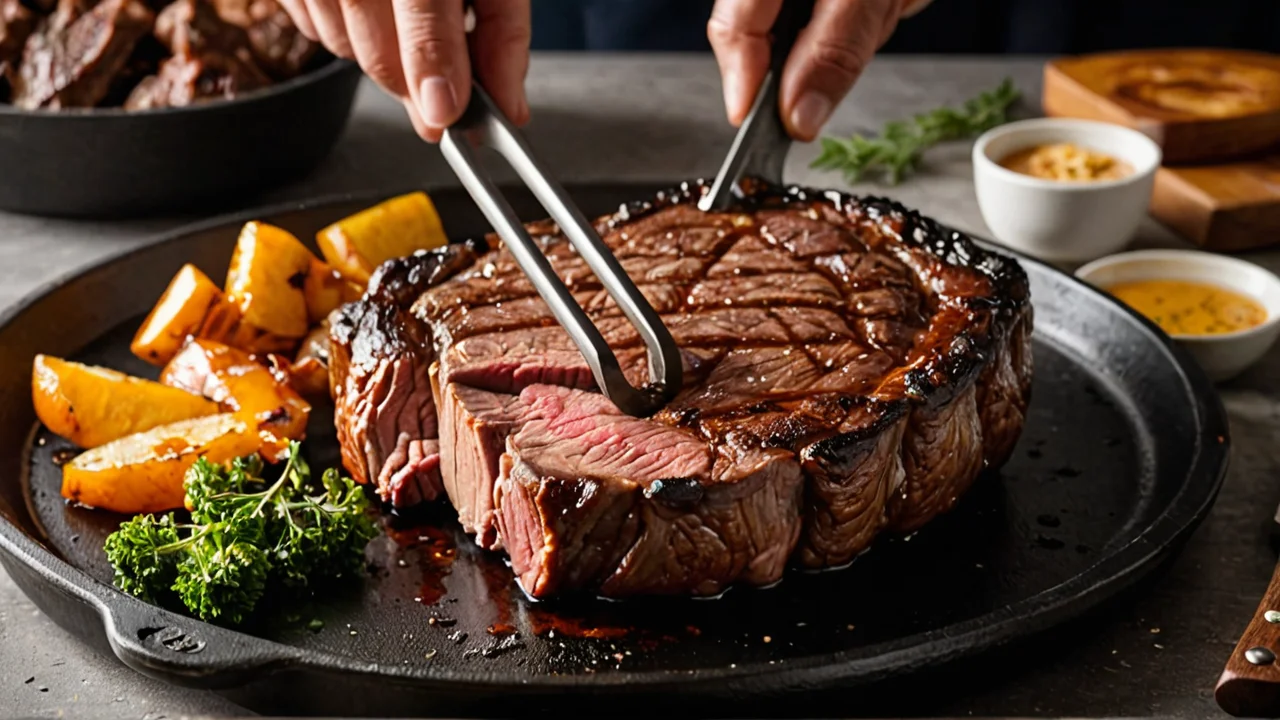
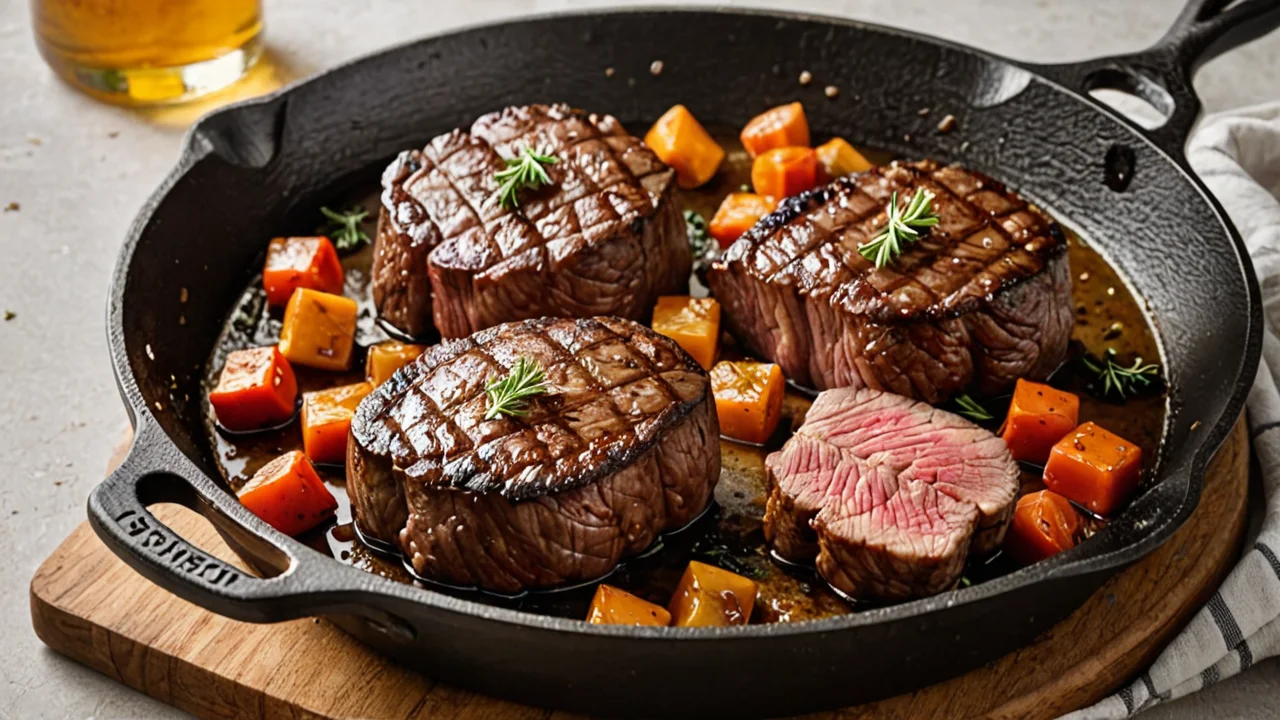
Searing is a separate technique with its own rules. The pan must be hot enough that the surface moisture flashes off before the protein bonds to the metal, and the food must be dry — pat it, salt it, and let it sit. A wet surface spends its energy on steam, not browning. Do not move the food until it releases; if it is stuck, it is not ready. The cost of a good sear is smoke and splatter, which is why high-smoke-point fats matter and why a hood or an open window is part of the technique, not an afterthought.
Ovens are also uneven in ways that recipes do not admit. The back corner runs hotter, the top rack is closer to the element, and a pan on the lower rack gets more radiant heat from below. Rotating a sheet pan halfway through is not fussiness; it is compensating for a machine that does not heat uniformly. Convection helps by moving air, which speeds browning and shortens cooking time — usually by a meaningful margin, so drop the temperature or check early rather than trusting the recipe's clock.
Where oven roasting loses: it is slow to respond. You cannot adjust the heat at the surface the way you can with a skillet, and you cannot see the food without opening the door and dumping heat. For anything small, thin, or expensive, a pan or a grill gives you more control. For anything large and forgiving, the oven's stability is the point.
Frying: the technique with the narrowest margin
Deep frying works by driving water out of the food's surface fast enough that the crust sets before oil soaks in, which is why oil temperature is the whole game. Too cool and the food steams and turns greasy; too hot and the outside burns before the inside cooks. Shallow frying is more forgiving because the food is in contact with the pan and you can see and turn it, but it has the same relationship between surface moisture and oil temperature.
Three things go wrong routinely. First, the oil is not hot enough because the cook added food before it reached temperature — you notice because the food sits and bubbles weakly instead of actively. Second, the pan is overcrowded, which drops the oil temperature and produces the same weak bubbling. Third, the food is wet, which causes spitting and a limp crust. Dry the surface, work in batches, and let the oil come back up between batches.
The trade-off is steep. Frying gives you the best crust of any technique and the fastest cook, and it costs you oil (which is not free and degrades with reuse), smoke, cleanup, and a real safety hazard if water meets hot oil. It is not a weeknight default for most people, and it does not have to be. An air fryer is a small convection oven, not a fryer; it browns by moving hot air and does a decent job on foods that are already coated in oil, but it will not give you the same crust on a wet batter. Know which machine you are actually using.
Where technique meets the danger zone, and the order you should think in
Food safety is not a separate topic from technique; it is the boundary condition on every method here. The numbers you need are few. Perishable food should not sit between 40°F and 140°F for more than 2 hours before it must be discarded. Poultry must reach 165°F (74°C) throughout. Egg dishes must reach 160°F (71°C). Cooked food reheated for hot holding must first reach 165°F, then be held at 140°F or above.
The order of decisions matters more than any single setting. First, choose the method from the cut: dry heat for tender, wet heat for tough, frying when you want crust and can accept the mess. Second, set your target temperature and get a thermometer into the thickest part, away from bone. Third, control the environment — preheat the oven, dry the surface before searing, keep the pan uncrowded, keep the slow cooker lid on. Fourth, watch the clock against the danger zone, especially for anything that starts cold, sits out during serving, or is being held warm for a crowd.
What each choice costs, in one place:
| Technique | Best for | What it costs you | How it fails |
|---|---|---|---|
| Searing / pan-frying | Tender cuts, crust, speed | Smoke, splatter, attention | Wet surface steams instead of browning; pan too cool |
| Oven roasting | Large cuts, sheet-pan vegetables | Uneven heat, slow response | Crowded pan; uncalibrated oven; no thermometer |
| Braising / stewing | Tough cuts, collagen-rich meat | Hours of time; no crust without a finish | Not enough liquid; cooked too hot and tightened |
| Steaming / poaching | Delicate proteins, vegetables, custards | No browning; bland without seasoning | Water at a hard boil; no target temperature taken |
| Slow cooking | Tough cuts, beans, chilis, stocks | Browning, precision, doneness control | Cold start spends too long in the danger zone |
| Deep / shallow frying | Crust, speed, batters | Oil, cleanup, hazard | Oil too cool; overcrowded pan; wet food |
The pattern across the table is that every technique trades control for something — speed, convenience, crust, tenderness — and the failures cluster where the cook did not notice which trade they were making. A slow cooker that does not brown is not broken; it is doing its job. A grill that cannot hold a low temperature is not a braise. The cook who knows the target temperature, keeps a probe within reach, and watches the two-hour clock against the danger zone has already solved most of what goes wrong in a kitchen, because the rest is seasoning and practice.