Cook to temperature, not to time, and treat the danger zone as a hard limit rather than a guideline: poultry must hit 165°F in the thickest part away from bone, egg dishes 160°F, and no perishable food should sit between 40°F and 140°F for more than 2 hours before you throw it out. Everything else in cooking and drinking — the braises, the custards, the cocktails, the coffee — is a negotiation around those numbers and around your own tolerance for effort, cost, and inconsistency.
Thermometers, not timers, decide when food is done
A $15 instant-read thermometer is the single highest-return piece of equipment in a kitchen, and the reason is that every other doneness signal is a proxy. Color is a proxy. Juice running clear is a proxy. "Eight minutes a side" is a proxy that assumes a pan temperature, a meat thickness, and a starting temperature you probably don't have. The internal reading is the thing itself.
The numbers that matter most: chicken and all other poultry need 165°F (74°C), measured in the thickest part of the meat and away from bone, because bone conducts heat differently and can give you a false reading. Egg dishes — a casserole, a slow-cooker custard, a frittata — need 160°F (71°C). Those two figures cover the overwhelming majority of home cooking risk, and they are not negotiable in the way that, say, a steak's doneness is.
How you actually use it: pull the probe from the fridge-cold center outward, and take two readings in different spots on anything thicker than your thumb, because ovens and pans have hot corners. On a whole bird, check the thigh without touching bone and the breast. On a braise, check the largest piece of meat, not the sauce. Calibrate the thermometer occasionally in ice water — it should read 32°F — because a probe that's drifted five degrees warm will tell you chicken is done when it isn't.
The cost of this approach is small and the cost of skipping it is asymmetric. You will overcook some things while you learn to trust the reading over the clock, and a probe leaves a hole in the meat that leaks juice. Neither matters next to the alternative. The limit of the method: a thermometer tells you safety, not quality. It cannot tell you a chicken breast at 165°F is going to be pleasant to eat — that's a separate problem, solved by brining, by pulling at temperature and resting, or by choosing a cut that tolerates heat better.
Slow cookers are safe by design — until you open the lid or hold food in them
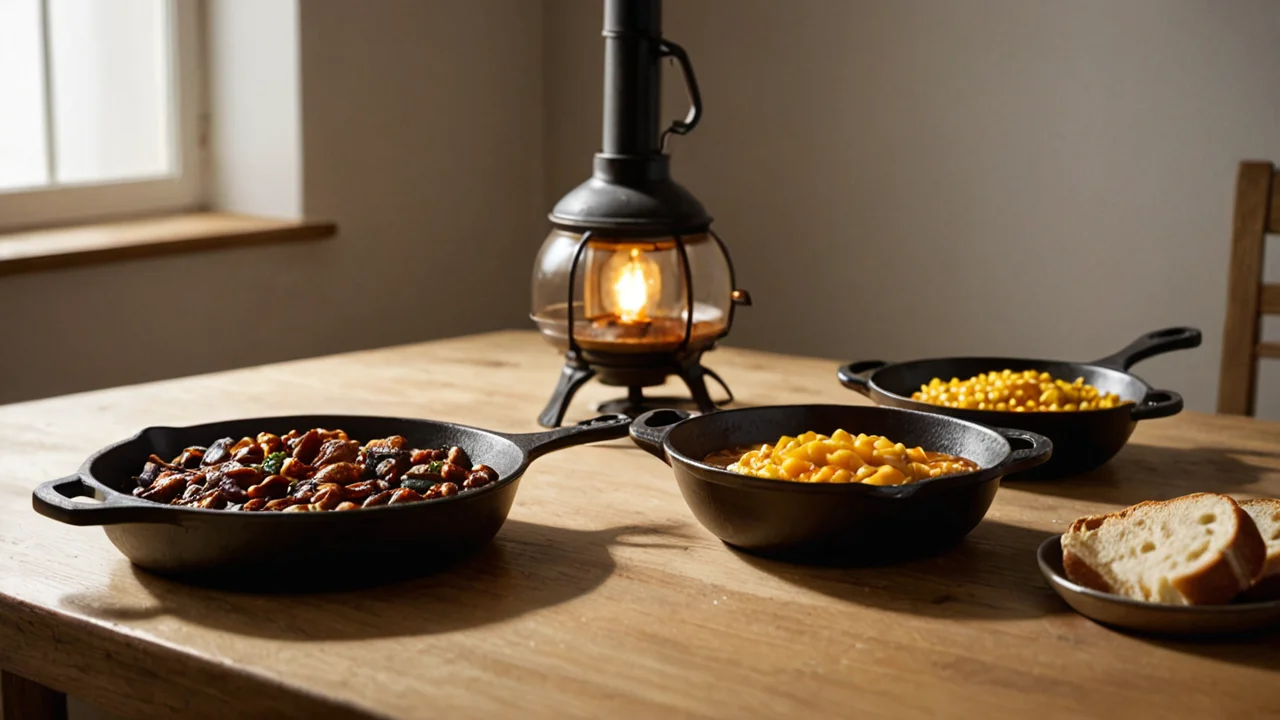
A slow cooker runs between 170°F and 280°F during normal cooking, which means the food inside spends its cooking time above the danger zone rather than in it. That's the whole safety argument for the appliance, and it's why the "low and slow" method isn't reckless despite the long unattended hours. The appliance is not the risk. The handling around it is.
The failure modes are consistent. First, lifting the lid: every time you open a slow cooker you dump heat, and on the low setting it can take a long while to climb back — which is time your food spends closer to the zone. Resist stirring for the first several hours; the appliance rewards leaving it alone. Second, using it as a holding vessel. If you cook something ahead and want to keep it warm for serving, it has to be reheated to 165°F first and then held at 140°F or above. Dropping cold or lukewarm food into a slow cooker on warm and walking away is how people get sick from a dish that was perfectly cooked an hour earlier. Third, overloaded pots: a slow cooker filled to the brim heats slowly and unevenly, and the center can lag well behind the edges.
What a slow cooker is genuinely good at is the collagen problem — tough cuts with a lot of connective tissue, which need sustained heat and moisture to turn tender. What it's bad at is anything you want browned, crisp, or cooked to a precise doneness. You cannot get a sear in one, and you cannot pull a chicken breast at 165°F on the nose, because the appliance doesn't give you that resolution. Sear on the stove and transfer, or accept that the texture will be braised rather than roasted. That's the trade: convenience and tenderness in exchange for browning and precision.
The danger zone is a clock, and most home kitchens run it out
Between 40°F and 140°F, bacteria on perishable food multiply rapidly, and the outer limit is 2 hours before the food should be discarded. That's cumulative, not per-serving. A pot of chili that sat on the stove through dinner, got put in the fridge, then came back out for lunch the next day has been through the zone twice.
The practical implications are more specific than the rule sounds. Cooling a big pot of stew or stock: a deep container in the fridge cools from the outside in, and the center can stay warm for hours. Spread it into shallow pans, or portion it into smaller containers, so it crosses the zone quickly rather than parking in it. Thawing: on the counter is a zone violation over a long window; in the fridge is not. Marinades: a marinade that held raw chicken is not a sauce unless you boil it. Buffets and cookouts: the two-hour clock is why chafing dishes and ice baths exist, and why you shouldn't trust your memory of when the potato salad came out.
What this costs you is mostly attention and a few containers. What it doesn't require is paranoia — the rule is about perishables and time, and a plate of bread or a bowl of whole fruit isn't the concern. The honest limitation is that home cooks can't measure bacterial load, so the two-hour figure is a conservative proxy, not a personal diagnosis. Treat it as a budget you spend rather than a line you can eyeball.
Technique choices trade time, money, and consistency against each other
Most kitchen decisions reduce to one question: what are you willing to spend to get a predictable result? The four levers are time, money, equipment, and attention, and nearly every method is a different allocation of them.
| Method | What it buys you | What it costs |
|---|
| Instant-read thermometer | Certainty on doneness; less overcooking | A few dollars to a moderate amount; a small learning curve |
| Slow cooker | Tenderness on tough cuts with unattended hours | No browning, no precision, and you must handle hot-holding correctly |
| High-heat searing and roasting | Color, crust, fast weeknight cooking | Attention, smoke, and a narrower window between done and overdone |
| Brining and salting ahead | Margin for error on lean meats; better texture | Planning hours or a day ahead; fridge space |
Brining is the clearest example of paying time for forgiveness. A wet brine or a dry salt applied hours ahead changes how a lean cut behaves under heat, widening the gap between "done" and "ruined." It costs you refrigerator space and forethought, and it's the wrong move for anything you want to taste of itself — a good dry-aged steak, a delicate fish — because salt forward is a flavor decision, not just a texture one. Dry salting is generally the better trade at home: less mess, less dilution, same effect.
Similarly, the choice between a slow braise and a pressure cooker is a time-versus-texture trade. The pressure cooker gets you tender in a fraction of the time; the long braise gives you a deeper, more integrated sauce and more control over the final reduction. Neither is "better." The question is whether you're cooking on a Tuesday night or a Sunday, and whether you'd rather have the hours back or the flavor.
Drink follows the same logic: temperature, dilution, and cost per good cup
The same variables govern what's in the glass. Temperature sets how a drink reads — a cold beer or a chilled white shows differently as it warms, and the reason is that aromatic compounds and perceived sweetness shift with temperature. Dilution is not a flaw; it's a tool. Ice in a cocktail is doing controlled watering, and a drink built over large, cold cubes or a single big rock reaches its intended strength more slowly than one shaken hard and poured over crushed ice. Stirred drinks are about chill and dilution with minimal aeration; shaken drinks are about aeration and texture. Choosing between them is choosing what the drink should feel like.
Then there's the cost question, which is where most people overspend without noticing. The expensive part of a home bar isn't usually the spirits — it's the modifiers, the fresh citrus, the syrups, and the waste when a recipe calls for a quarter ounce of something you'll never use again. A small, well-chosen set of bottles plus fresh juice and a simple syrup will outdrink a crowded shelf of one-off purchases. The trade is variety for quality and shelf life: fewer options, better drinks, less spoilage.
Coffee and tea have the same structure. Grind size, water temperature, and brew time are the three dials, and changing one without holding the others constant is how people conclude a bean is bad when the extraction was. Freshness is the lever you can't fix later — pre-ground coffee stales fast, and no brewing method rescues it. The honest limitation of all of this: taste is the final arbiter, and the numbers get you into the right neighborhood, not to a verdict. A drink you like at a strength you didn't expect is a correct drink.
Build the skills in the order that pays off fastest
Learn to measure temperature first, because it's the skill that protects you and improves everything else. Buy one good instant-read thermometer, learn the two numbers that matter most — 165°F for poultry, 160°F for egg dishes — and calibrate the probe. That single habit changes how often you overcook meat, and it costs almost nothing.
Second, learn to salt ahead and to rest. Dry-salting a chicken or a pork shoulder hours before cooking, and letting cooked meat rest before slicing, are both free in money and expensive only in planning. They widen your margin for error more than any gadget. Third, learn one braise and one high-heat method well, so you can move between "I have three hours" and "I have thirty minutes" without reaching for something packaged. A slow cooker covers the first case within its 170°F to 280°F range; a hot pan and a thermometer cover the second.
Fourth, learn the danger-zone clock as a habit rather than a rule you look up — cooling in shallow containers, thawing in the fridge, boiling marinades, and knowing that 2 hours is the ceiling. Fifth, and only then, start spending on the drink side: a few good bottles, fresh citrus, a scale for consistency, and a willingness to taste and adjust rather than follow a recipe to the milliliter.
The order matters because each step makes the next one cheaper. Temperature skill reduces waste, which reduces the cost of experimenting. Salting ahead reduces the pressure to buy expensive cuts to get tenderness. The danger-zone habit reduces the fear that makes people avoid cooking for others. What you're buying, in the end, isn't a set of rules — it's the confidence to cook without a recipe and pour without a measuring cup, and to know when the result is close enough. The limit is that none of this substitutes for tasting. The numbers keep you safe and consistent; your mouth decides whether it was good.
Eggs in a slow cooker need their own number, not the poultry one
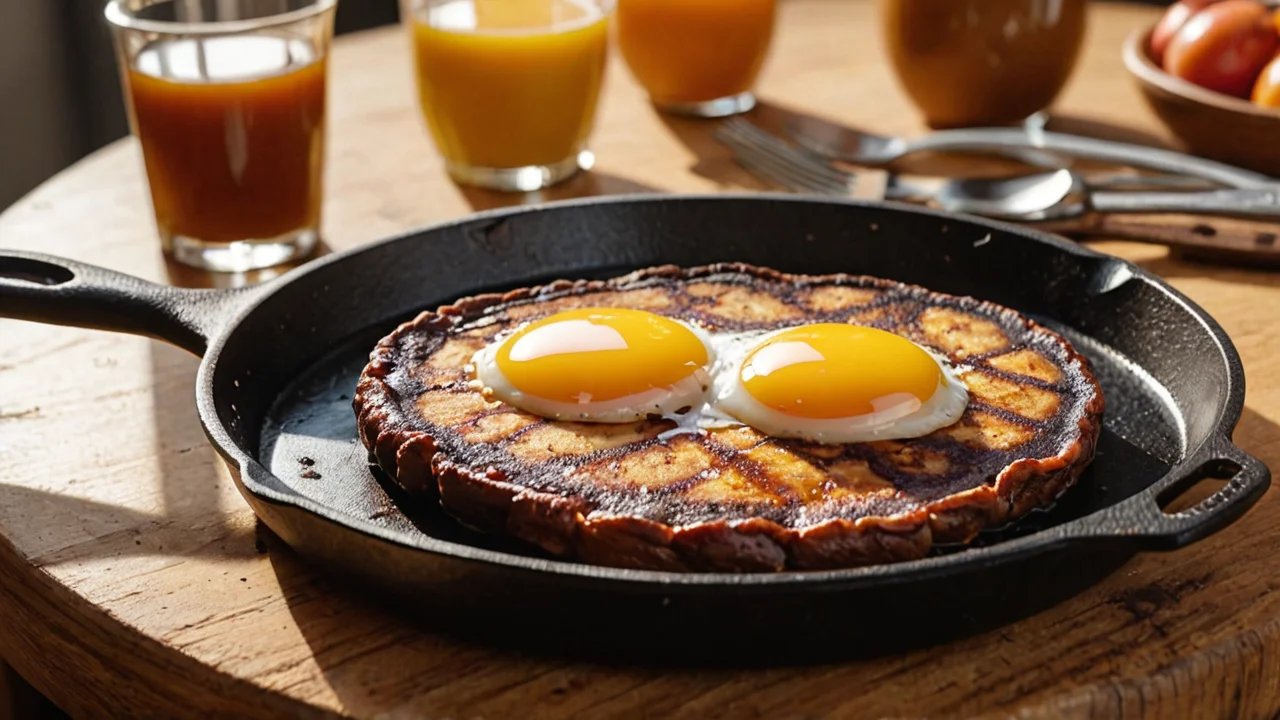
Egg dishes need 160°F (71°C), not 165°F, and that distinction matters most in the appliance where you can't see what's happening. A slow-cooker custard, a strata, a bread pudding built on eggs — the center is the last thing to set, and the edges will look done while the middle is still loose. Take the reading in the center, not at the rim. Because a slow cooker runs between 170°F and 280°F, the vessel itself will push an egg dish past 160°F if you leave it, and past that point you're not cooking, you're curdling: you'll see it as a grainy texture and a little weeping liquid around the sides. Pull the insert, or switch to warm, once the center reads 160°F. The trade-off is that custards carry over — the residual heat in a ceramic insert keeps cooking the middle for a while after you stop — so err toward pulling early rather than late. Where this fails is a dish you can't probe cleanly, like a frittata with a crust; there, a knife in the center coming out clean is the best proxy you have.
Reheating is a separate step from holding, and skipping it is the quiet failure
Two numbers govern keeping food warm, and they are not the same number: reheat to 165°F, then hold at 140°F or above. Cooks collapse these into one and lose the point. The reheat step is a kill step — it takes a cooled dish back through the danger zone and out the other side with the bacteria knocked down. The hold step is a maintenance step at a temperature where bacteria don't multiply rapidly. A slow cooker on warm is a holding tool, not a reheating tool; dropping yesterday's chili in cold and trusting the appliance to bring it up is exactly how a safely cooked dish becomes an unsafe one, because the center can loiter between 40°F and 140°F for far longer than the 2-hour ceiling. Reheat on the stove or in the microwave until it's steaming and reads 165°F, then transfer to the slow cooker and confirm it's holding at 140°F or above. If you can't confirm the hold, serve sooner. The cost is an extra pan and a thermometer reading; the limit is that a slow cooker's warm setting varies by model, so check yours rather than assuming.